

The Content Pillar System - From “I post about …” to a weekly content machine
Most creators pick content pillars the wrong way: by topic category instead of unique position. This playbook fixes that. You get a 3-prompt chain to excavate credible angles only you can own.

The shift that changes everything
So here’s what happened after Edition 1 dropped. (if you have not read it, here is the link)
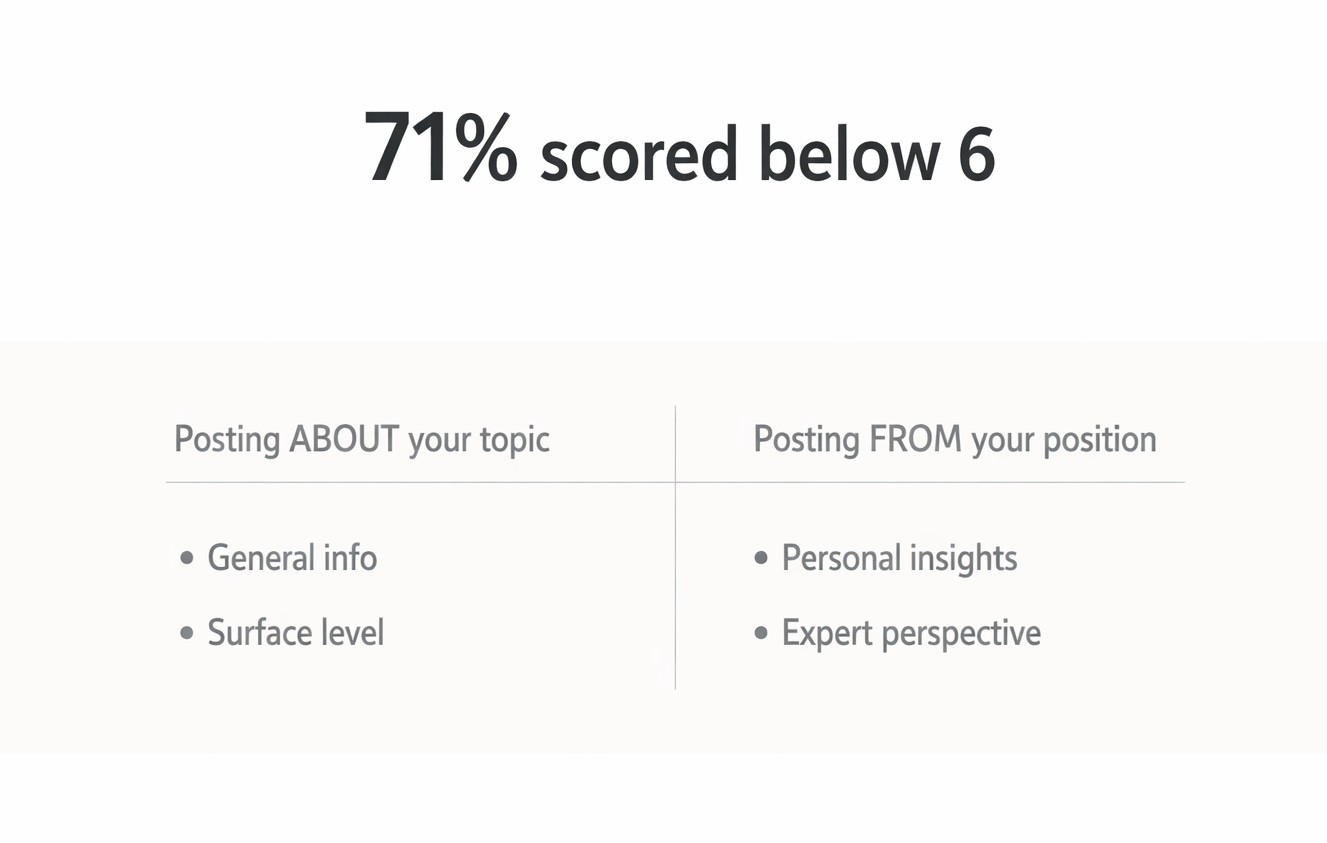
71% of 26 replies scored below a 6 on the content diagnostic.
I went through every single reply. Same pattern kept showing up over and over:
“you’re posting about your topic instead of posting from your unique position within it.”
That distinction sounds small. It changes everything, though.
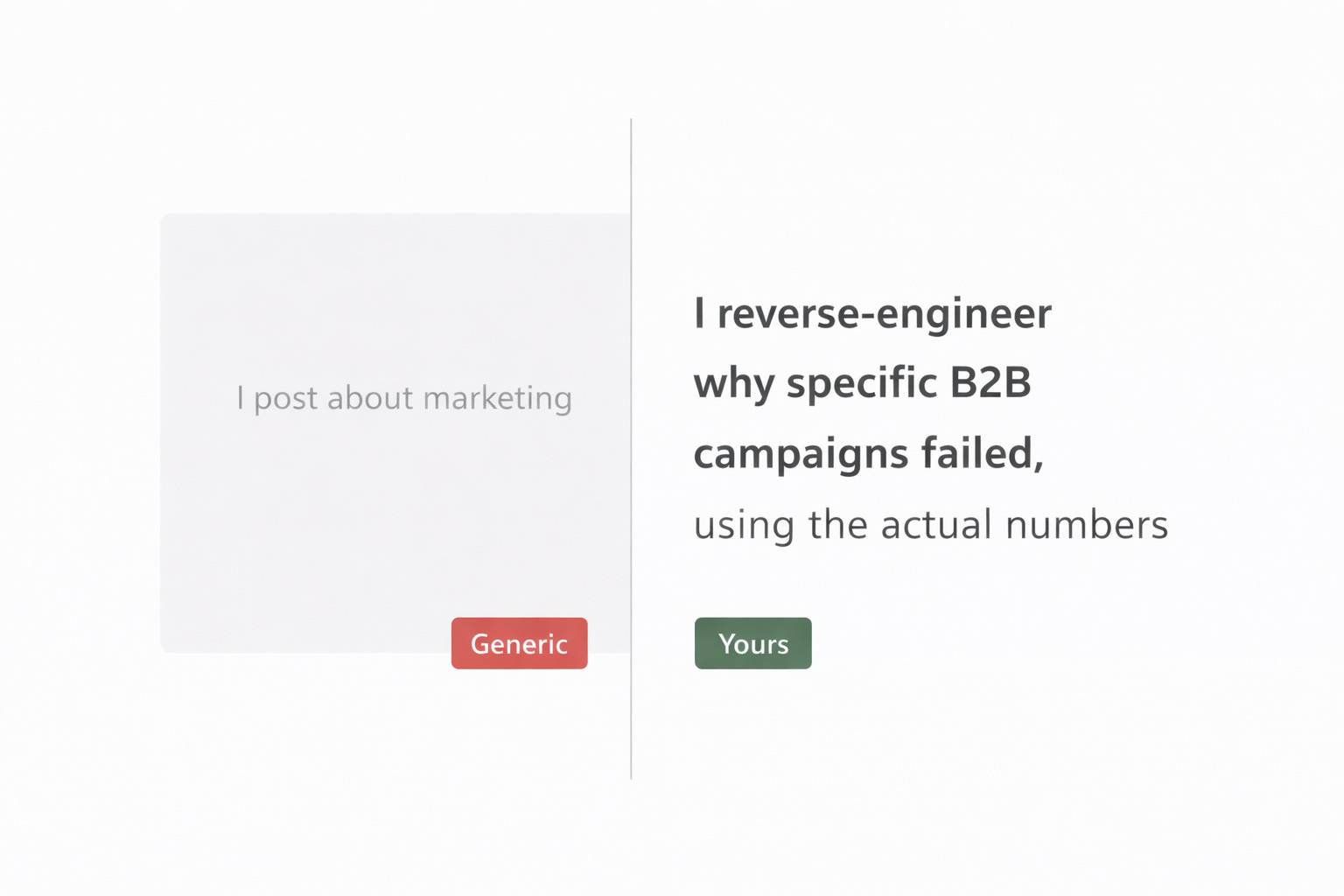
It’s the difference between “I write about marketing” and “I reverse-engineer why specific B2B campaigns failed, using the actual numbers.”
This combined edition gives you the full system, start to finish. We’re going to find your real content pillars, test them before you commit, and build a weekly workflow that doesn’t depend on you feeling creative or not.
Fair warning: this is a long one. Bookmark it. You don’t need to do everything today. Run Part One this week, come back for Part Two and Three when you’re ready. But if you want the full understanding in one sitting, grab a coffee and let’s go.
How this edition actually works
Every prompt in this edition has two versions.
The version you’ll see inline below gives you the structure and the thinking so you understand what each prompt does and why. Then there’s the Refined Prompt Library, which has the full upgraded versions of all 11 prompts with sharper role definitions, step-by-step thinking instructions, detailed output formats, and built-in quality checks. I’ll show you one complete refined prompt in Part One so you can see the difference. The rest are in the library document.
Download the Refined Prompt Library here
Why two versions? Because reading a 90-line prompt in a newsletter is a terrible experience. The inline versions teach you the thinking. The library versions are what you actually paste into Claude or ChatGPT.
Think of this edition as the explanation. The library is the execution tool.
PART ONE: Stop guessing what to post about
Let’s kill a bad idea right at the start.
Every content strategy guide tells you to “pick 3-5 content pillars.” Most people hear that as: pick 3-5 topic categories. Marketing tips. AI news. Leadership advice. Done.
That’s not a content strategy. Ten thousand other people in your space picked the exact same categories.
What a real content pillar actually looks like
A real pillar sits at the intersection of three things:
1. Expertise that’s actually yours
Not just “I know about marketing.” More like “I spent 4 years running paid acquisition for a bootstrapped SaaS that went from $0 to $2M ARR, and I saw every mistake you can make with a small budget.”
2. Problems your audience can’t stop thinking about
Not what you think they should care about. What keeps them up at night, what they’re Googling at 11pm, what they vent about in Slack communities.
3. Angles nobody else is covering
If you removed your name from the post and five other people could have written it, it’s not a pillar.
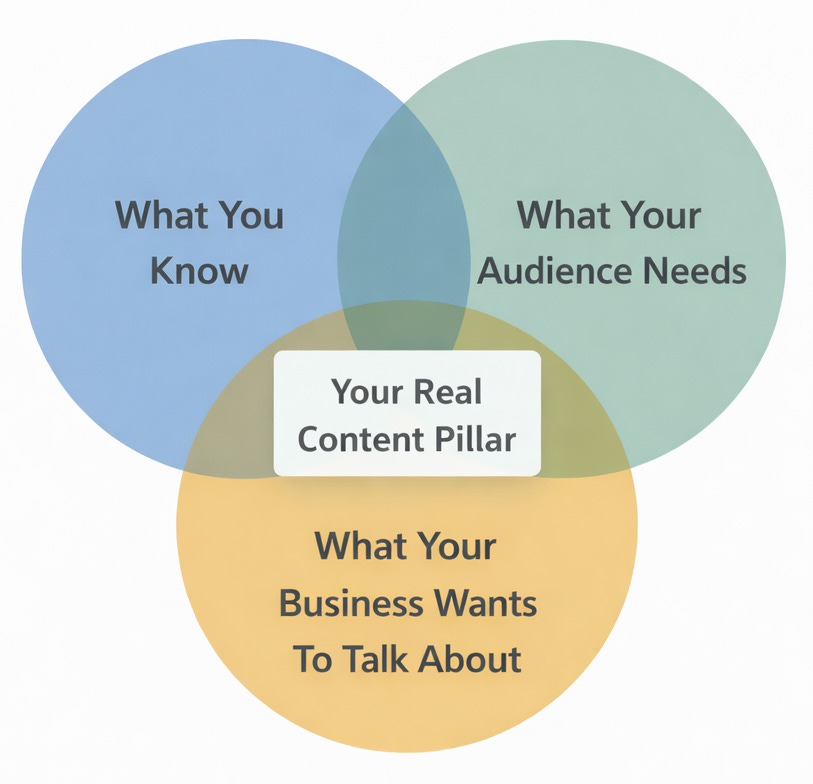
If any one of those three is missing, your content is generic. And generic content is the reason people post consistently for months, get decent engagement, but never build an actual audience that notices when they go quiet for a week.
Before you touch the prompts: gather your raw material
The prompt chain below takes about 30 minutes to run. But the quality of what comes out depends entirely on what you put in.
Spend 10 minutes on this prep work first. Open a doc and answer these:
1. Experience inventory
List every role you’ve held (title + years + one sentence on what it taught you). What problems have you solved that were unusual or difficult?
2. Contrarian beliefs
This is the most important input. List 3-5 things you believe about your field that most of your peers disagree with. For each one: why do you believe this? What evidence do you have? These become your strongest content angles.
3. Failure log
3 professional failures or mistakes that taught you something you can’t learn from a textbook.
4. Unusual intersections
What skills or experiences do you combine that don’t usually go together? (”I’m a developer who used to sell cars” or “I’m a marketer with a psychology degree”)
5. Audience knowledge
What questions do people ask you most often? What advice do you find yourself giving repeatedly? What frustrates you about the common advice in your space?
This document is the raw material. The prompts can only work with what you give them.
The 3-prompt pillar mining chain
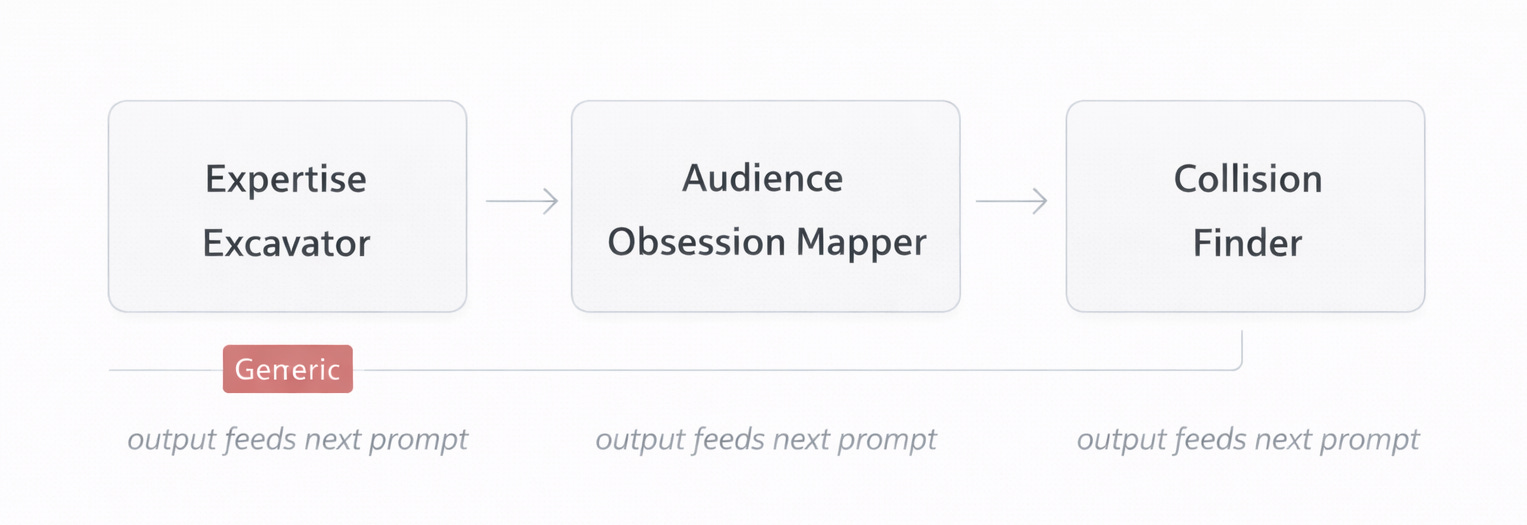
Each prompt feeds into the next one, so the order matters. Don’t skip ahead.
Prompt 1’s output becomes Prompt 2’s input, and Prompt 2’s output goes into Prompt 3. That’s what makes this a chain instead of three random exercises.
Prompt 1: The Expertise Excavator
ROLE:
You are a positioning strategist who has spent 15+ years helping founders and executives uncover the specific expertise they take for granted. You think like a brand strategist but operate at the content level. You look for what someone knows that they assume everyone knows, because that gap is where original content lives.
CONTEXT:
The user wants to find content angles rooted in their actual experience, not generic topic categories. Most people describe their expertise in broad terms (’I know marketing’) instead of specific, credible terms (’I ran paid acquisition for a bootstrapped SaaS from $0 to $2M ARR on a $3K/month budget’). Your job is to surface the specific, the unusual, and the credibly defensible.
INPUT (fill in all sections before running):
- Professional experience: [YOUR ROLES - include title, years, industry, company stage/size]
- Skills people ask you about: [WHAT COLLEAGUES, CLIENTS, OR PEERS COME TO YOU FOR]
- Contrarian beliefs: [3-5 THINGS YOU BELIEVE THAT MOST IN YOUR SPACE DISAGREE WITH - include WHY you believe each one and what evidence you have]
- Failures and hard lessons: [SPECIFIC MISTAKES, WHAT WENT WRONG, WHAT YOU LEARNED THAT TEXTBOOKS DON’T TEACH]
- Unusual combinations: [SKILLS OR EXPERIENCES THAT DON’T USUALLY GO TOGETHER - e.g., ‘developer who sold cars’, ‘marketer with a psychology degree’]
TASK:
Analyze the background above and produce content angles that only this specific person could credibly argue. Follow this thinking process:
Step 1: Identify knowledge gaps. What does this person know from direct experience that most people in their space learn secondhand or not at all?
Step 2: Map contrarian positions. For each belief they hold that goes against consensus, assess how defensible it is based on their evidence. Strong contrarian positions with real evidence become the highest-value angles.
Step 3: Find collision points. Where do their unusual skill combinations create perspectives that nobody with a single-track background would have?
Step 4: Pressure-test each angle against this question: If you removed the person’s name and five other people in the same space wrote the same take, would it be indistinguishable? If yes, it fails. Cut it.
OUTPUT FORMAT:
For each angle (produce 8-10 total):
- ANGLE: [One-sentence description of the content angle]
- CREDIBILITY SOURCE: [Exactly which part of their background makes this angle theirs to own - be specific, not ‘you have experience in X’]
- CREDIBILITY GAP SCORE: [1-10] How much more believable is this person on this topic compared to the average person in their space? 1 = anyone could say this. 10 = almost nobody else can say this with a straight face.
- GENERIC FLAG: [YES/NO] If YES, explain what makes it generic and suggest how to sharpen it
- SAMPLE HOOK: [One opening line that would make someone in their target audience stop scrolling]
After listing all angles, add:
- TOP 3 STRONGEST: Ranked by credibility gap score, with a one-line explanation of why each one is hard to copy
- KILL LIST: Any angles that scored below 5 on credibility gap, with a short explanation of why they are too generic to pursue
CONSTRAINTS:
- Do NOT produce angles that are just topic categories (’marketing tips’, ‘leadership advice’)
- Do NOT inflate credibility. If the background does not support an angle, say so
- Do NOT use phrases like ‘leveraging your expertise’ or ‘unique insights’ - be concrete about what makes each angle specific
- Every angle must pass this test: could this person defend this take in a room full of their peers without getting laughed out?
- Avoid promotional language, AI vocabulary words (pivotal, landscape, tapestry, delve, foster), and vague qualifiers
What you’re doing here is feeding your raw material to an AI that acts like a positioning strategist, not a generic prompt. Notice the ROLE section. That’s your brain on the other end, asking the right questions in the right order.
Here’s what this prompt is actually doing: It’s telling the AI not to summarize your background like a LinkedIn headline. It’s telling the AI to look for the specific, the credible, and the unusual. The things you take for granted because you’ve been doing them for years.
The output is 5-7 content pillars stated as “I’m the person who...” statements. Not “I’m interested in marketing.” More like “I’m the person who reverse-engineers why bootstrapped SaaS companies blow through their ad budgets on the wrong channels, and I can tell you exactly when to pull the plug on a campaign.”
That’s not a pillar category. That’s a market position.
Prompt 2: The Audience Obsession Mapper
Take the output from Prompt 1 and paste it directly into this one. This is where it gets interesting, because you’re about to find out which of your unique angles your audience actually cares about. Your best insights might get ignored by the people you want to reach. Better to learn that now than three months into posting about it.
What it does: Scores each of your content angles on a 1-10 “audience obsession” scale. Classifies each angle as a painkiller (urgent need) or vitamin (nice to have). Translates your expert language into the words your audience actually uses. Predicts what type of engagement each angle would generate (DMs vs. saves vs. likes).
What you feed it: Your audience profile (who they are, what they’re trying to do, where they hang out, what they complain about) plus the full output from Prompt 1.
What you get back: Your angles ranked by audience obsession score. Everything below a 6 goes on the kill list. You’ll also get “surprise findings” where angles score higher or lower than you probably expected.
Full refined prompt is in the Prompt Library document.
Prompt 3: The Collision Finder
Now paste Prompt 2’s output into this one. The Collision Finder runs your top angles against the competitive landscape. It asks the uncomfortable questions: is this angle already crowded? Could someone confuse your post with a competitor’s? Could you realistically own this space in 6 months?
What it does: Runs a saturation check, differentiation test, and ownership potential assessment on every angle that scored 6+ on audience obsession. Asks whether each angle has enough depth to sustain 50+ posts. Produces your final 3 pillars with “I’m the person who...” positioning statements.
What you feed it: The ranked output from Prompt 2, your niche, your top 5 competitors and what they typically post about.
What you get back: Your top 3 content pillars. A kill list of angles that seem good but are actually saturated. An acid test for each pillar: “If I stopped posting about this for 2 weeks, would specific people in my audience notice and reach out?”
Full refined prompt is in the Prompt Library document.
What comes out the other end
You’ll leave with 3 content pillars and an “I’m the person who…” line for each.
This isn’t your LinkedIn headline or bio tagline. It’s your internal guide.
When you sit down and think, “What should I post today?”, this is the filter you use.
Here’s the transformation in practice: “I post about marketing” becomes “I’m the person who reverse-engineers why specific B2B campaigns failed, using the actual numbers.” The first one gets lost in the noise. The second one gets followed.
Quick ask before you keep reading: Run the chain above and share your top “I’m the person who...” statement by replying to this email. I’ll tell you straight up if it passes the “only you can say this” test.
Now, here’s the catch with finding your pillars. It feels great. You finally have clarity. And that good feeling can trick you into committing too fast. Most people lock in pillars based on what excites them, not what their audience actually responds to. That’s where Part Two comes in.
PART TWO: Test your pillars with a 7-day sprint
You now have 5-7 real pillars, stated in language that feels like a position instead of a category.
Don’t publish them yet. Not until you know they’ll actually resonate with people.
This is where most creators skip the most important step and then wonder why their content never gains traction. They think “I have good ideas, so people will follow me.” That’s not how audience building works. You need proof that people actually care about the angle you’re taking, not just the topic.
So we’re going to validate these pillars before you commit a month to them. This is a 7-day sprint.
The validation sprint: what you’re actually testing
Pick two of your strongest pillars. You’re going to post once a day for 7 days—just posts, not long-form content. One post from Pillar A, one from Pillar B, then repeat. Nothing fancy. Posts that take you 20 minutes to write. The goal is volume and speed, not perfection.
You’re measuring one thing and one thing only: which pillar gets engagement from people who don’t already know you?
Not total likes. Not people already following you. Actual new people clicking, commenting, and asking questions.
Sprint Prompt 1: Rapid Content Generator (Days 1-2)
This prompt creates 5 post concepts, each from a completely different angle. An Educator take, a Contrarian take, a Storyteller take, a Tactician take, and a Vulnerable take. You’re not going to post all five. You’ll pick two. The reason for testing multiple angles: you want signal diversity, not just maximum likes on one approach.
What it does: Generates 5 complete post drafts, each testing a different dimension of your pillar. For each post, it identifies what specific signal you’re looking for (DMs from ideal customers? Saves from target audience? Comments from peers?). Then recommends which 2 to publish first for maximum learning.
What you feed it: Your top pillar with “I’m the person who...” statement, your platform, 2-3 voice adjectives plus one example of your best writing, and your target audience.
What you get back: 5 full drafts with hooks, engagement predictions, and signal-testing rationale. A recommended pair to publish first with publishing order.
Full refined prompt is in the Prompt Library document.
Sprint Prompt 2: Engagement Decoder (Days 3-4)
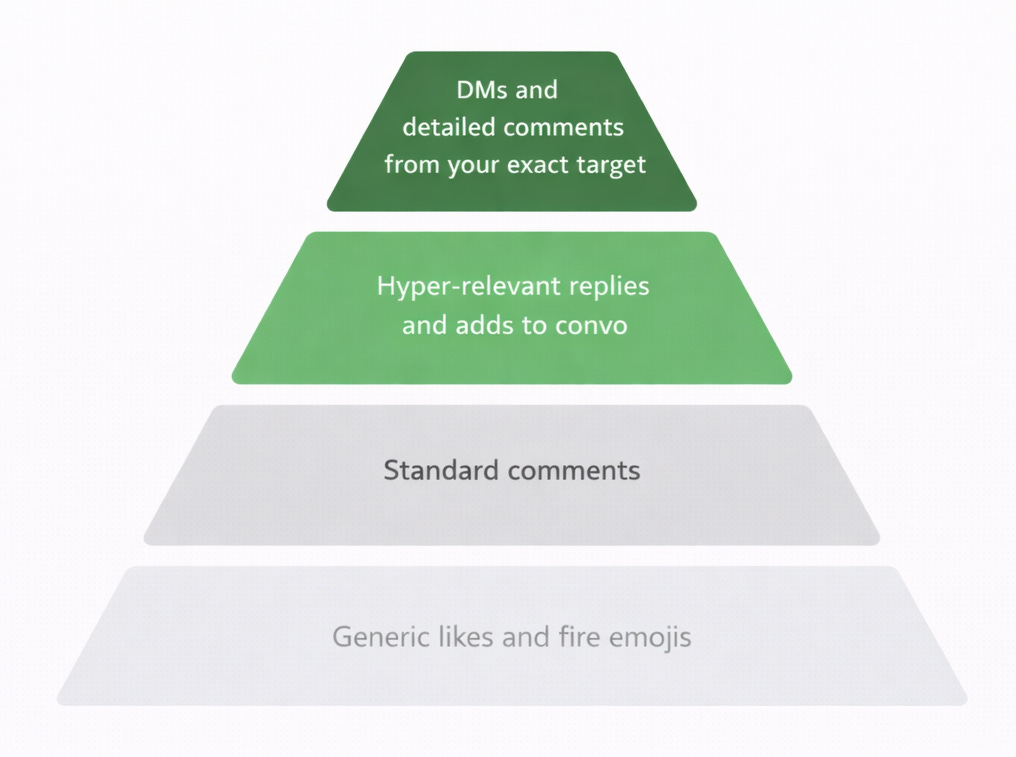
After your first posts go live, run this prompt with the actual performance data. It looks beyond vanity metrics. Saves and shares matter way more than likes for pillar validation. A post that gets 50 likes from random accounts tells you nothing useful. A post that gets 10 saves from people in your target audience tells you this pillar has a pulse.
What it does: Runs a 4-tier signal analysis. Tier 1 is DMs and detailed comments showing the reader has this exact problem. Tier 4 is generic likes and fire emojis. It diagnoses what specifically drove engagement (the angle, the format, the hook, the specificity), checks whether the right audience engaged, and scores your pillar health from 1-10 with specific criteria.
What you feed it: The post itself, your pillar, your target audience, and all the engagement numbers including actual comments and DM themes.
What you get back: A signal breakdown by tier, resonance analysis, audience fit verdict, pillar health score, and specific iteration directives for the next post.
Full refined prompt is in the Prompt Library document.
Sprint Prompt 3: Iteration Engine (Days 5-7)
This one takes everything you learned from the first round and creates follow-up content that doubles down on what worked. It also tests something important: can this pillar sustain multiple angles, or was it a one-hit wonder?
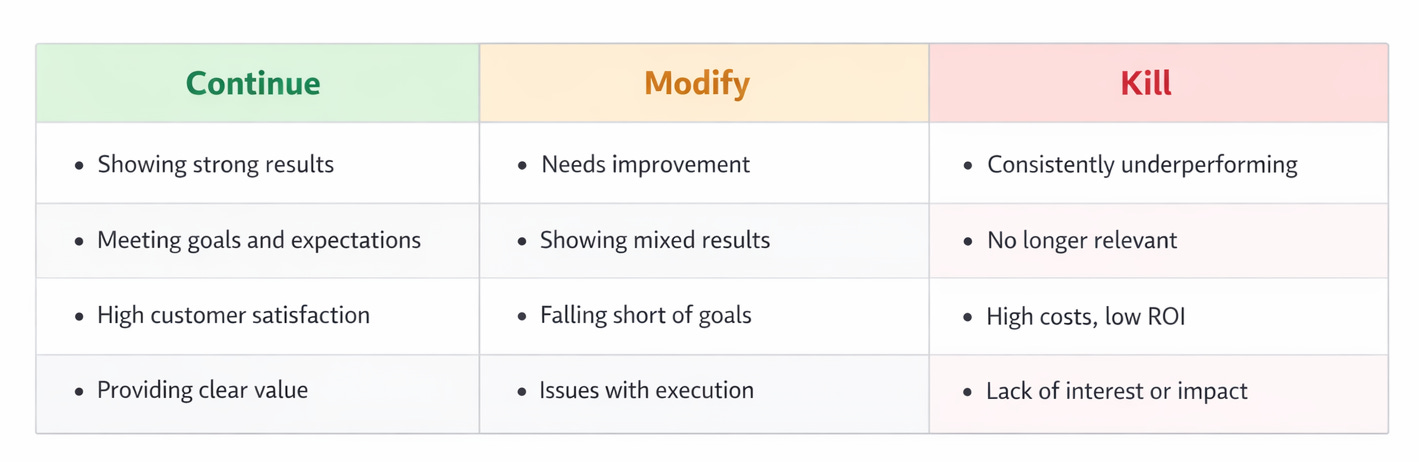
What it does: Generates 3 follow-up posts: a Double Down (go deeper on what worked), an Adjacent Angle (test a different dimension of the same pillar), and a Depth Probe (go significantly more advanced to test how deep your audience wants to go). Ends with a decision framework for Continue / Modify / Kill.
What you feed it: Your pillar, the engagement decoder analysis from both test posts, what resonated most, and your audience fit assessment.
What you get back: 3 complete post drafts with hypotheses for what each one tests, plus a 5-question decision framework you run after all posts are published.
Full refined prompt is in the Prompt Library document.
How to make the call after 7 days
You’re not looking for viral numbers here. You’re looking for signal quality. One DM from your ideal customer is worth more than 1,000 random likes. Here’s how to read the results:
Continue if the right audience is engaged, engagement got better across the week, you can easily think of 20+ more ideas for this pillar, and you got DMs or “how do I work with you” type responses.
Modify if the audience was right but engagement was uneven. Your pillar might be solid but the angle or format needs adjusting. That’s not failure, that’s signal.
Kill if the wrong people engaged, engagement was flat or going downhill, or you’re already struggling to think of what to say next. No shame in it. Test your second pillar. That’s the whole point of doing a sprint instead of a 90-day blind commitment.
Killing a bad pillar after 7 days stings for about an hour. Realizing you wasted 3 months on the wrong topic stings for a lot longer.
If one pillar pulls way more engagement than the other, you have your signal. If both underperform, your pillars need sharpening. If both hit, you’ve got the foundation.
This matters because you’re going to spend the next months building on whatever you validate here. Spend 7 days getting the signal right instead of spending 3 months posting into the void.
Your 7-day validation template
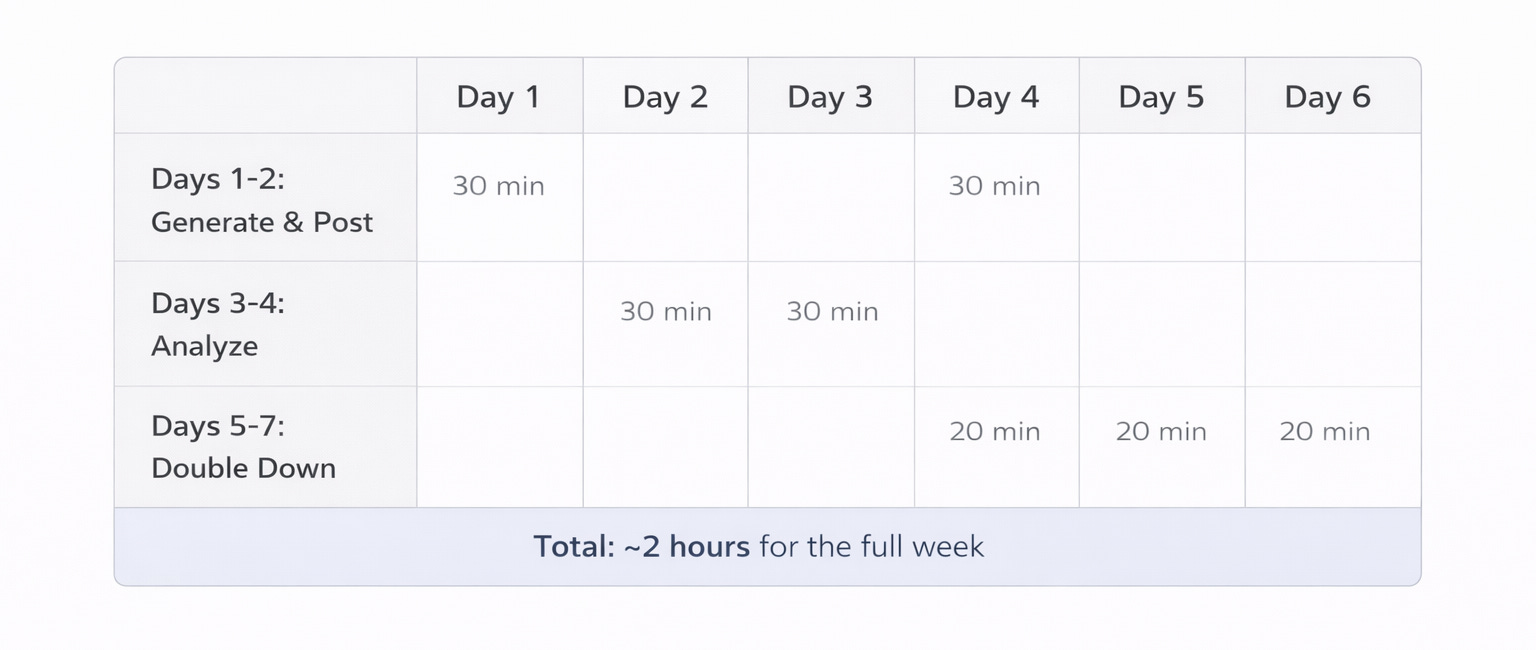
Post one per pillar per day. Here’s the structure:
Day 1-2: Pillar A (post in morning, observe for 24 hours). Pillar B (post next day)
Day 3-4: Same pattern
Day 5-6: Same pattern
Day 7: Review and pick your winner
Where are you posting? LinkedIn if your audience is there. Twitter if that’s where the conversation is. Substack notes if you’re already there. Post where people in your audience actually spend their time.
What you’re looking for after 7 days:
→ Which pillar got comments instead of just likes?
→ Which pillar had people asking follow-up questions?
→ Which pillar did people save or share?
→ Which pillar brought new followers who engaged on other posts too?
These are the signals that your pillar resonates, not just that your topic is interesting.
Scaling to your best pillar
Once you’ve validated which pillar performs, you do one thing: you post from that pillar for the next 4 weeks before you add another. Not 3 pillars at once. Not a mix of everything. One pillar. Four weeks. Consistency.
This is where people usually lose the thread. They think “I have more ideas I want to share” or “my audience might get bored.” Neither of those are real problems at this stage. Your problem right now is building an audience that trusts you know something specific, not showing how many different things you know about.
PART THREE: Your AI-powered weekly content system
Over the first two parts, you diagnosed your content, found your lane, and validated it with real engagement data. If you’ve been following along and doing the work, you know more about your content positioning right now than most creators figure out in a year.
And yet. Monday morning comes around and you’re still staring at a blank screen thinking “okay, but what do I actually write this week?”
This is where most people fall off. They figured out what to talk about but never built a system for doing it week after week. They wait for inspiration.
And let me be honest about something: inspiration is the most unreliable business partner you’ll ever have.
Here’s what I’ve learned from running multiple newsletters and publishing content across platforms every single week: consistency and quality are now critical for audience building. AI doesn’t replace your thinking. It externalizes your thinking so you can execute even on the days when your brain won’t cooperate.
Consistency and quality are now critical for audience building. Your thinking is the system. The prompts just make that thinking portable.
Bookmark this section. You don’t need to read every prompt right now. Run Master Prompt 1 today. Come back for the rest when you’re ready. This is a reference doc.
Build your Content DNA document (do this once)
The prompts in this system are only as good as the context you feed them. If you give generic inputs, you get generic content.
Ten minutes on this setup once will make every output noticeably better.
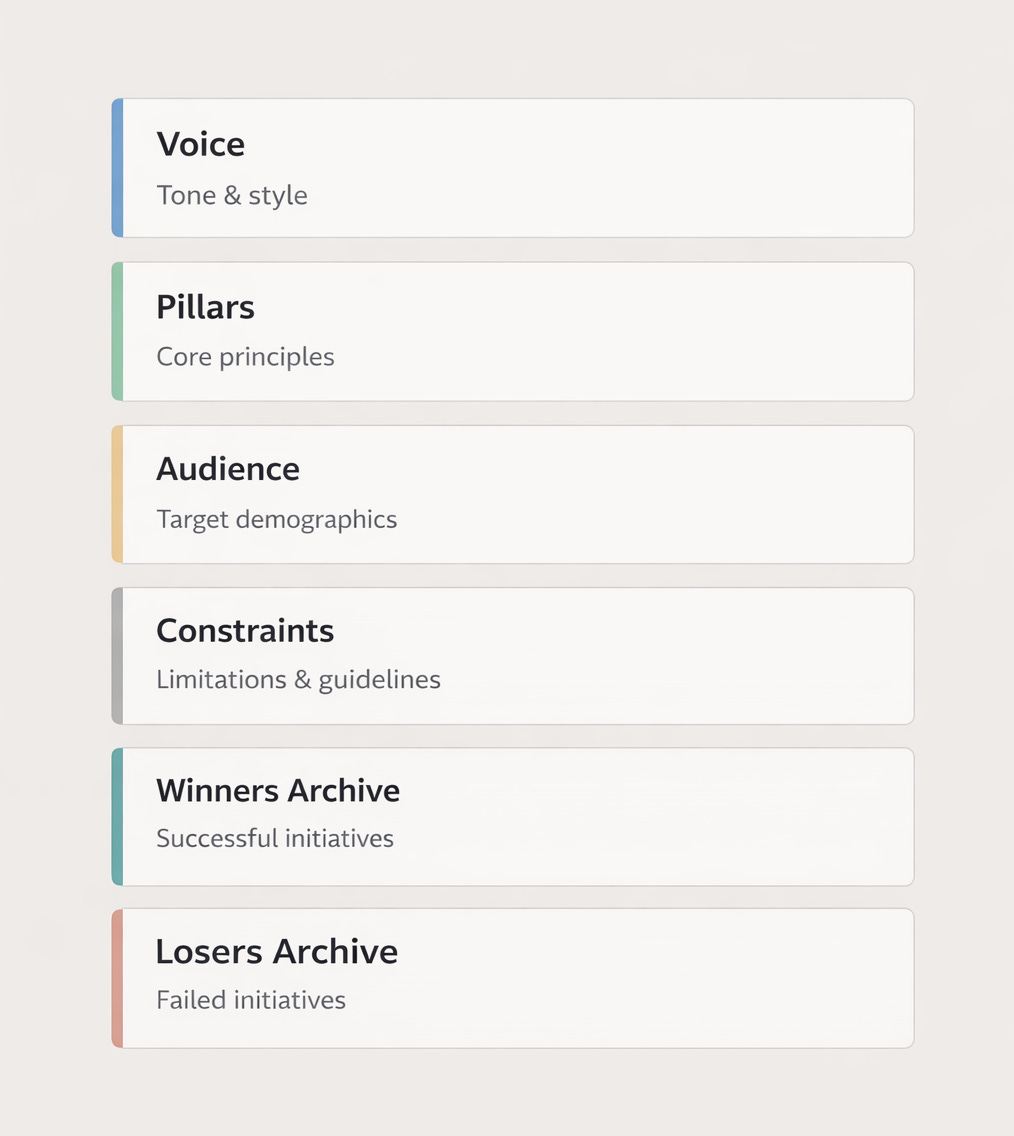
Create a document (Google Doc, Notion, whatever you already use) with these sections. You’ll paste it at the top of every prompt going forward:
VOICE: 3 adjectives describing your writing, things you NEVER sound like, and 2-3 paragraphs from your best performing posts as voice examples.
PILLARS: Your “I’m the person who...” statements from the validation sprint.
AUDIENCE: Who they are, their #1 problem right now, words THEY use to describe their pain (their language, not yours), what they’ve tried that didn’t work.
CONSTRAINTS: Platform, realistic posting frequency, content time available per week, topics you refuse to cover.
WINNERS ARCHIVE: Top 5 posts with notes on why they worked.
LOSERS ARCHIVE: 3 posts that flopped with notes on why.
Two things about this that people miss.
First, the Losers Archive. Most people only study their wins. The losses are actually more useful here because they teach the AI what kind of content to avoid generating for you.
Second, the “Words THEY use” field. Without it, the AI writes in your professional jargon instead of the language your audience actually uses. Small field, massive difference in whether the output connects or falls flat.
If staring at a blank template feels overwhelming
There’s a DNA Document Assembly Assistant in the Prompt Library that walks you through building this step by step. It asks you to paste your best and worst posts, analyzes your natural voice patterns, identifies when you lose your voice, and compiles everything into the DNA format.
Takes about 15 minutes and it builds your DNA from evidence instead of self-description (because most people are reliably bad at describing their own writing voice).
Full DNA Assembly prompt is in the Prompt Library document.
Master Prompt 1: Weekly Strategy
This is your Monday morning prompt. Paste your Content DNA at the top, add what happened last week and anything relevant from this week, and let it map out your content plan.
Takes about 10 minutes.
What it does: Reviews last week’s performance, scans for timely opportunities, checks your pillar balance, generates 5 content concepts, and recommends the top 3 for this week with publishing order. It flags anything that fails the generic check (”could someone else in your space post this?”) and parks unused concepts for future weeks.
What you feed it: Your Content DNA, plus this week’s context: industry news, personal experiences worth sharing, audience questions you’ve seen, and last week’s performance data.
What you get back: A last-week debrief, 5 concepts with hooks and engagement targets, top 3 recommendation with publishing order, and a parking lot of ideas saved for later.
Full refined prompt is in the Prompt Library document.
Master Prompt 2: Draft Architect
Pick a concept from Prompt 1 and run it through this. It creates a full draft that matches your voice, includes something concrete (a number, a story, a specific example), and ends with either a comment-driving question or a save-worthy statement.
What it does: Studies your voice examples, writes a draft matched to your specific tone and style, includes at least 2 concrete elements (numbers, stories, named examples), and runs 5 self-checks before presenting the output. If any self-check scores below 7, it automatically revises and shows you both versions.
What you feed it: Your Content DNA, the concept from Master Prompt 1, your target platform, and target length.
What you get back: A complete draft with voice match score, pillar connection check, specificity count, scroll-stop assessment, and a losers archive comparison.
Full refined prompt is in the Prompt Library document.
Master Prompt 3: Edge Finder
This is the editor prompt, and honestly it might be worth the entire system on its own. The first time you see your own draft get sharpened by this prompt, you’ll understand why I made it a separate step.
What it does: Runs 5 editing passes on your draft. Pass 1 is the Name Removal Test (could anyone else have written this?). Pass 2 is the Specificity Audit (replaces every vague statement with something concrete). Pass 3 is Hook Surgery (rewrites your opening 3 ways and picks the strongest). Pass 4 is the Delete Test (cuts anything that doesn’t earn its place). Pass 5 is the Share Trigger Check (makes sure there’s at least one line someone would screenshot or forward).
What you feed it: Your Content DNA and the draft from Master Prompt 2.
What you get back: An editing report with scores, a revised draft with all 5 passes applied, and a change summary explaining what mattered most.
Full refined prompt is in the Prompt Library document.
Master Prompt 4: Repurpose Engine
One piece of content shouldn’t live on one platform and die there. This prompt takes your finished piece and adapts it for LinkedIn, X threads, short-form posts, and newsletter hooks. Each version gets rewritten for how that specific platform works. Not just the same text with a different word count.
What it does: Adapts your content into 4 platform-specific versions. LinkedIn post optimized for the algorithm’s dwell time and comment signals. X thread where every tweet is a standalone thought. Short-form post under 280 characters that works as a screenshot. Newsletter hook that creates an open loop. For each version, it explains what changed and why so you learn the adaptation logic.
What you feed it: Your Content DNA, the finished piece from Master Prompt 3, and the original platform.
What you get back: 4 platform-adapted versions plus an adaptation logic summary you can apply yourself next time.
Full refined prompt is in the Prompt Library document.
The full picture
Here’s what you walked away with today:
→ A context prep guide and 3-prompt chain to find content pillars that are actually yours, not topic categories anyone could claim.
→ A 7-day sprint framework to validate those pillars with real audience data before you commit your next three months to them.
→ A Content DNA document (with a guided builder if you need it) that makes every AI-assisted output sound like you wrote it on your best day.
→ And a 4-prompt weekly system that takes you from blank page to a full week of content in about an hour.
The descriptions in this newsletter teach you the thinking. The library gives you the execution tools.
Download the Refined Prompt Library: [INSERT LINK]
Your system is your thinking
The prompts aren’t the system, though. Your thinking is the system. Your pillars, your voice, your understanding of who you’re writing for and why they should listen to you specifically.
The prompts just make that thinking portable. They let you execute on a bad Wednesday the same way you would on a good Monday.
That’s what separates people who post when they feel like it from people who actually build an audience over time. A system that shows up even when you don’t feel like it.
One more thing before you go.
Everything above — all 11 prompts — is free. Download The Content Pillar System prompt library
Run the Expertise Excavator. See what comes out. That alone is worth the 30 minutes.
If you’ve tried AI prompts before and gotten generic output, the problem was almost certainly the inputs.
The Complete OS ($49) includes the Input Playbook showing exactly what strong vs. weak inputs look like for every prompt, video walkthroughs of the entire system running with real data, and example outputs at every stage so you know if your results are on track.
And if you’d rather I just build it for you — there are 5 spots this quarter where I run the full system with your inputs in a live 90-minute session and hand you a working content machine. Details on the same page.
Now go open a doc and run that Expertise Excavator prompt.
Talk soon, Ayush
Now go open a doc and run that Expertise Excavator prompt. The 30 minutes you spend on it this week will save you from months of posting content that could have come from anyone.
Talk soon,
Ayush
Announcement (I have launched Comment OS)
The Comment Engine OS is live. The first system that turns LinkedIn comments into your highest-ROI distribution channel.

Loved this post?
Other prompts that I’ve shared earlier:
[Content OS 1/4] Your Content is Invisible. Diagnose and Fix using this prompt system in 30 Seconds.
Reddit Problem Mining Prompt System: 0→1 Validation in Hours Not Months
The Founder’s Story Bank OS: 52 Repeatable Narratives for GTM, Leadership, Product & Hiring
Your Plan Will Fail - Unless You Invert These 18 Hidden Assumptions (Master Prompt Included)
Fundraising Narrative Prompt Engine: Build your Story for Investors
Copy This LinkedIn Profile Upgrade Template (I used It to 8x my Profile Visibility)
If you’re not a subscriber, here’s what you missed earlier from my another newsletter:
The AI Partner Stack: 8 Roles as My Advisory Board (Part 2 of 2)
Find trends before others: Frameworks, Techniques, Sources and Prompts
The Market Entry Timing Equation: When Being Early Wins and When It Kills You
The Viral LinkedIn GTM Playbook: Frameworks That Drove Engagement and Leads
5 LinkedIn Systems Generating 8-Figure B2B Pipelines [Complete Teardown]
Distribution Before Product: The Operator’s 90-Day GTM Playbook - With Prompts